
Fix the Tire and Move On: Murray Barnes on Life, Cars, and What Home Care Really Means For Him
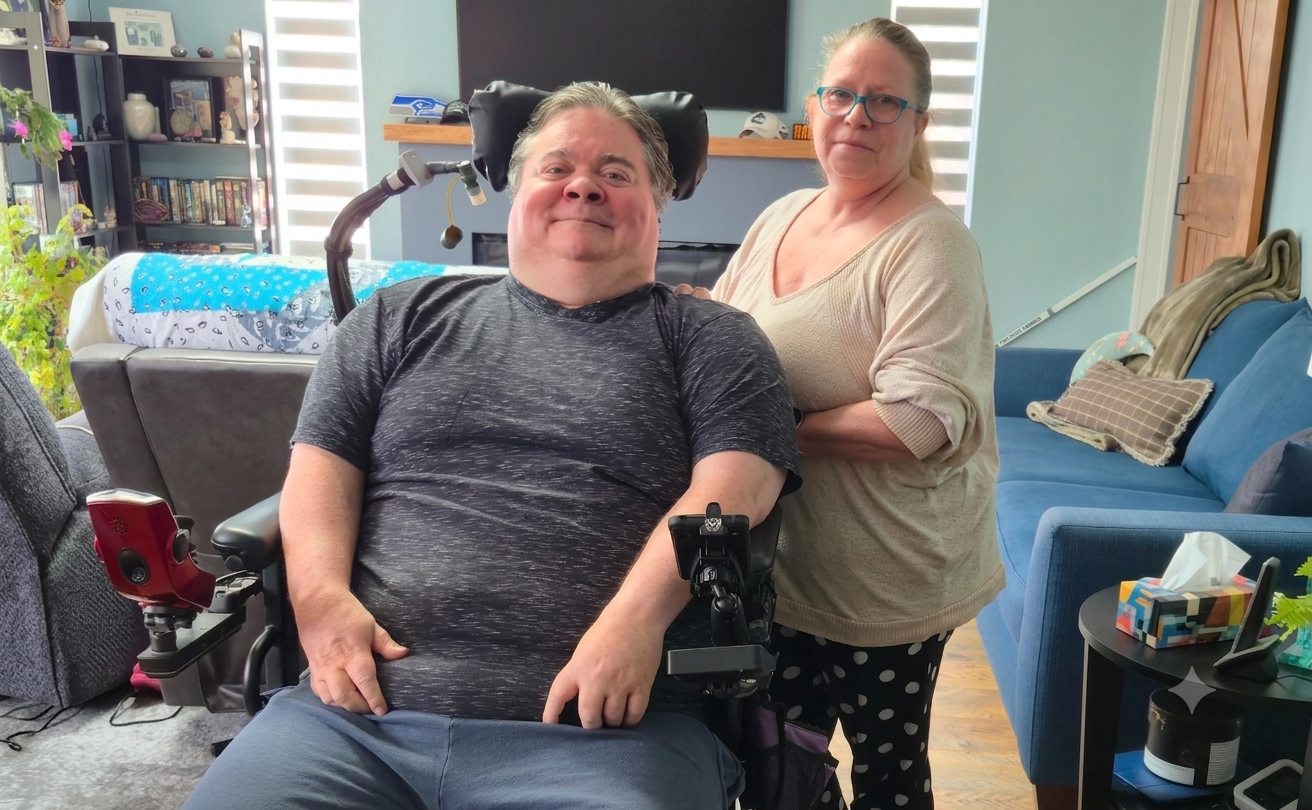
How home care in Vancouver helped Murray Barnes reclaim his independence and gave his wife Louise room to be his partner again, not his caregiver.
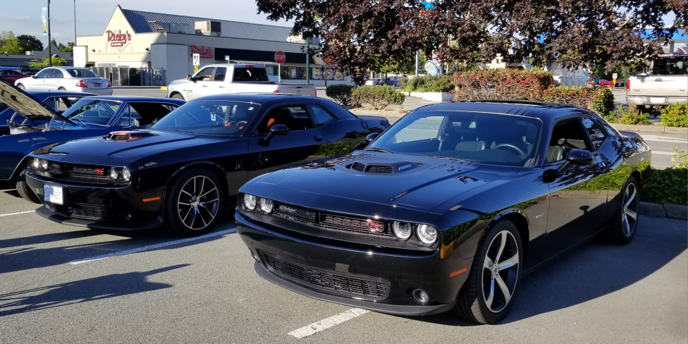
If you’ve ever been to a car meet in the Lower Mainland of Vancouver, there’s a good chance you’ve crossed paths with Murray Barnes. You’d remember him. The big grin. The shirt was covered in muscle cars. The stories about his blacked-out Dodge Challenger Scat Pack with over 500 horsepower under the hood. Murray doesn’t just like cars. He grew up around them, working on engines alongside his father who drove trucks for a living. Cars became his thing early, and they never stopped being his thing.
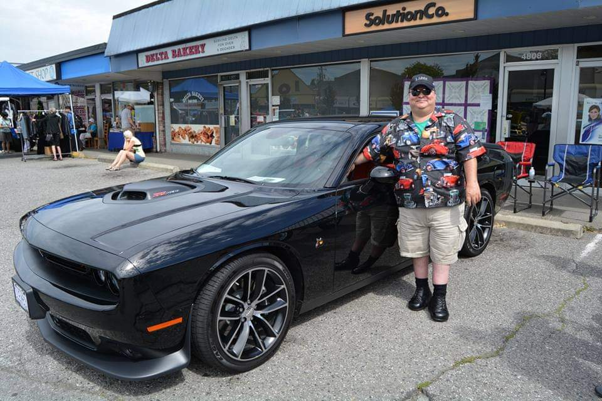
Murray is 62. He was born with Arthrogryposis Multiplex Congenita (AMC), a condition that affects the joints, muscles, and nerves, and he’s spent much of his life using a wheelchair. But if you ask the people around him, that’s never been the first thing they’d tell you about him. Murray built a career in IT with the Delta Police Department. He was the kind of person people came to when something wasn’t working, and he liked it that way. He spent decades with his wife Louise and drove 12 hours straight to visit family in Alberta just because he loved the open road. Before his accident, the only help Murray ever needed was someone to tie his shoes. If he dropped something on the ground, it stayed there until he figured out how to get it himself. That was Murray.
Then everything changed.
When independence is no longer an option
A motor vehicle accident in 2018 caused bulging discs in Murray’s neck, pinching the nerves that ran down his arms. Over time, he lost most of his arm strength. After surgery in 2024, the things Murray had always handled on his own were suddenly out of reach. Getting dressed. Brushing his hair. Feeding himself. He tries every day, but most of the time he needs help. Still, Murray doesn’t dwell on what he’s lost. “It could be worse,” he says. “It can always be worse.”
That’s not something Murray says to fill a silence. He means it. It’s how he’s approached everything, his entire life.
After his surgery, Murray spent a month at Vancouver General Hospital and two more months in rehab. Three months away from home. Three months without privacy, without quiet, without the ability to just sit and be. When he came home, he knew one thing for certain. He wasn’t going back.
How home care changed everything
That’s where Classic LifeCare’s home care services in Vancouver came in. As one of the region’s most established home care providers, Classic has supported people across British Columbia and Alberta for over 50 years, not just seniors, but anyone whose body needs more support than their independence used to require, at any age.
Classic healthcare workers visit Murray regularly, helping him with the daily tasks that his body no longer allows him to do on his own. Getting out of bed. Showering. Dressing. Eating. The kind of in-home care that doesn’t make headlines but changes the shape of someone’s entire day.
For Murray, it means everything. “There is no comparison,” he says. “I’ve spent a lot of my life in hospitals. You feel better at home.”
Protecting the people who care the most
But it’s not just about Murray. It’s about Louise too. Before Classic’s home care services, the weight of Murray’s care fell entirely on her shoulders. She’s a caregiver by trade, working at Delta Hospital in extended care. She knows what caregiving looks like professionally. But doing it for your husband, every morning and every night, is something different.
“You guys have been fantastic,” Murray says. “Less stress for my wife so she doesn’t burn out. She’s my wife, not my caregiver.”
That one sentence says more about what home care really means than any brochure ever could. Real caregiver support isn’t just about the person receiving care, it’s about protecting the relationship around them. Classic doesn’t just support Murray. It protects the relationship between Murray and Louise. It gives her space to be his partner, not his nurse. That’s not a small thing. That’s everything.
Living life on his own terms
Today, Murray spends his time the way he wants to. He does daily exercises trying to regain mobility in his arms. He plays computer games; mostly fantasy RPGs he can handle with just a mouse. And when the weather is nice, Louise walks and Murray rolls down to the local car meet to catch up with the guys and look at what’s new.
He misses driving. He had to give up his Challenger because he could no longer get in and out of it. He cancelled his license after surgery. But he hasn’t given up on getting it back one day.
“I do miss a lot of things I used to be able to do,” he says. “Doesn’t mean I’m not going to try.”
If there’s one thing to know about Murray Barnes, it’s that the way he sees the world hasn’t changed, even when his world has. He puts it in the only language that feels right to him.
“Life is a journey. Sometimes you get a flat tire, pulled off to the side of the road. Fix the tire and move on.”
Classic LifeCare has been providing home care services across British Columbia and Alberta for over 50 years. If someone you love needs support to stay at home, contact us to learn how we can help.